In short: Unexplained infertility means your standard tests came back in range, not that nothing is going on. Research suggests unexplained infertility actually carries better odds of natural conception than most other diagnoses, and the next step is often a closer look at what a basic workup skips: a full thyroid panel, iron stores, vitamin D and B12, well timed progesterone, and your overall pattern.
“Unexplained.” That is the word you were given for your unexplained infertility after the bloodwork, the ultrasound, the dye test and the semen analysis all came back normal, and you still aren’t pregnant. It is a diagnosis that isn’t really a diagnosis.
I’ve been helping women and couples get pregnant since 2001, more than 2,000 of them, and I had my own son at 42. The first thing I tell every woman with this label is the same: your body isn’t broken. “Unexplained” is not a finding. It is medicine saying, out loud, “we don’t know yet.”
What does unexplained infertility actually mean?
It means the standard panel came back in range and conception still isn’t happening. That’s it. It is a description of what the tests could not see, dressed up as a diagnosis. I want you to translate it in your head to: “we haven’t found it yet with the tools we used.”
This label gives you nothing to push against, so the pushing turns inward. You start auditing yourself: the wine at your cousin’s wedding, the years on birth control, the stress. That blame doesn’t belong to you.
Your action step: Write down every test you’ve had and the date. You can’t ask what was missed until you know what was done.
Are the odds with unexplained infertility really that bad?
No, and this part should lift some weight off your chest. A large 2026 study published in Human Reproduction Open followed thousands of couples from diagnosis and measured natural conception leading to a live birth within a year, before any treatment. Unexplained infertility was the strongest positive signal on the entire list. When nothing has been found to be wrong, your body is more likely, not less, to do this on its own.
For a typical woman of 35 with this label, the study’s model estimated about a 15 percent chance of a natural conception ending in a live birth over the next 12 months, with nobody doing anything for her. That is an average, and your own number moves with your details, but it is likely better than the number in your head. The label feels like a sentence. The data says you have room left.
Your action step: Let go of the idea that every month without IVF is wasted. You have room to be strategic.
What wasn’t checked when you were told “unexplained”?
So why isn’t everyone in that group pregnant? Because “unexplained” often means the search stopped. “Normal” is a range built for the general population. “Optimal” is a range built for someone trying to make a human. Here is what I ask women to request by name.
1. A full thyroid panel, including antibodies
Many workups stop at TSH. A thyroid that looks fine on one number can tell a different story on the others.
2. Ferritin, not just hemoglobin
Ferritin shows your iron stores. One woman came to me at 39 after three years of trying with no diagnosis. Her bloodwork showed anemia. With personalized herbs and changes to her diet, she was pregnant about three months later. Every woman is different, and I can’t promise that for anyone.
3. Vitamin D and B12
Both are simple blood tests that are easy to leave off a standard fertility panel.
4. Progesterone drawn on the right day for your cycle
Progesterone is often drawn on day 21 by default. If your cycle isn’t 28 days, that may be the wrong day. It should be timed to about a week after you ovulate.
5. Whether endometriosis was ruled out or never looked for
When researchers looked surgically at women labeled “unexplained,” a large share turned out to have endometriosis, often mild and often without painful periods, which a standard ultrasound can miss. I’ll cover silent endometriosis fully in its own post.
6. Your pattern, the layer no lab measures
Bloodwork measures levels at a single moment. It doesn’t measure whether your body is running hot and dry, cold and depleted, or heavy and stuck. It doesn’t measure circulation to the ovaries or low grade inflammation. None of that shows up out of range, but it can shape whether a healthy egg meets a receptive lining.
Your action step: Bring this list to your next appointment and ask for the numbers, not “is everything normal.”
How long should you keep trying at 35 before asking for more?
There are two clocks running, not one. Everyone talks about the age clock, which you cannot change. Almost nobody tells you about the drift clock: how long you’ve been trying without an actual plan. In the same study, time spent trying cut the odds about as much as years of aging did. That is the clock you can change.
US guidance from the American Society for Reproductive Medicine says that at 35 or older, an evaluation is warranted after six months of trying, and sooner over 40. If you’ve passed that without a full workup, asking isn’t impatient.
Some research in women over 39 with unexplained infertility found similar live birth rates whether they tried naturally for a year first or went straight to IVF. I would never tell you to skip treatment, but the panic isn’t supported by what we know. Your eggs go through roughly 90 days of final maturation, so the eggs you’ll ovulate a few months from now are being built right now. You can read more in my post on how to improve egg quality after 35.
Your action step: Put a date on it. Pick the month you’ll ask for a full workup or your next step, and write it down.
Why doesn’t generic advice work for unexplained infertility?
Take two women, both stamped “unexplained.” One runs hot and dry: a short, light cycle, always wired and tired. In Chinese medicine I’d call this a depleted, dried out pattern. The other runs cold and stuck: heavy periods with clots, cold hands and feet, sluggish circulation. Same label, opposite bodies, and they need opposite support.
That is why you cannot out-supplement an untreated pattern. Sometimes the pattern is hiding in daily life. I’ve worked with night shift doctors and flight attendants whose cycles became irregular. When we regulated their sleep, their cycles came back, and one was pregnant within four months of starting her herbal medicine. Every woman is different, and I can’t promise that for anyone.
I support women trying 100% naturally and women doing IVF, IUI or a frozen embryo transfer. If you are heading toward a cycle, herbal support belongs in the months before it and is stopped once fertility medications begin. Chinese medicine works alongside your clinic and doctor, never instead of them. You deserve to feel well now, not only for a future baby. If this is your second child, my post on secondary infertility after 35 may help too.
Your action step: For one cycle, note your cycle length, period color and flow, energy, sleep and digestion. Those clues point toward your pattern.
Frequently asked questions
Can you get pregnant naturally with unexplained infertility?
Many women do. Research suggests it has better odds of natural conception than most other diagnoses, though your chances depend on your age and history.
What tests should I ask for with unexplained infertility?
Ask about a full thyroid panel with antibodies, ferritin, vitamin D, B12, and progesterone timed to about a week after ovulation. Also ask whether endometriosis was ever ruled out.
How long should I try before seeing a specialist at 35?
US guidance suggests an evaluation after six months of trying if you are 35 or older, and sooner if you are over 40.
Is unexplained infertility really an egg quality problem?
Not always. Egg quality can play a part after 35, but thyroid, iron, timing, inflammation and your overall pattern can all be involved, which is why it helps to look before assuming.
About the author: Dr. Gina Terinoni, DACM
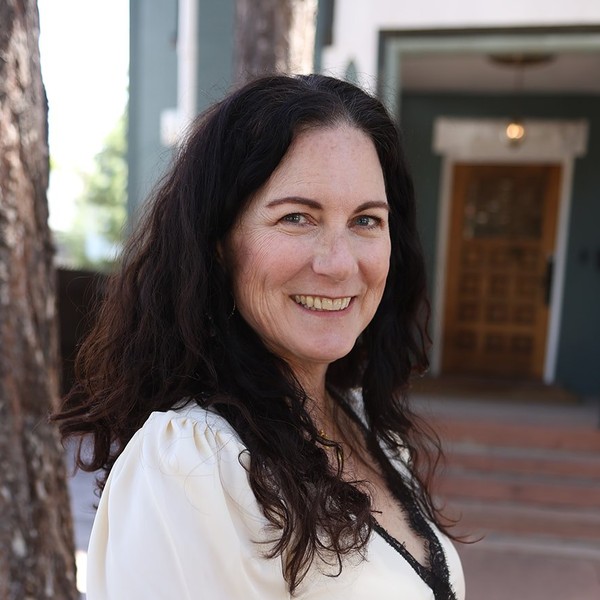
Dr. Gina Terinoni is a Doctor of Chinese Medicine (DACM), certified in integrative medicine through Dr. Aviva Romm’s Women’s Integrative and Functional Medicine program. She has helped more than 2,000 women and couples on their fertility journeys since 2001, and she had her own son at 42. More about Dr. Gina.
Want my eyes on what your tests missed?
If you’d like to know what may be sitting underneath your “unexplained” label, your Reveal is the place to start. You send me your intake and tongue photos, I record a personal audio review of your fertility pattern, and then we meet for one 30-minute Zoom call to answer your number one question. It’s $297. Learn about your Reveal here.
This article is for education and is not medical advice, diagnosis or treatment. No outcome is guaranteed. Please talk with your own doctor or qualified provider before making changes to your care.


Leave a Reply