In short: After two miscarriages, you no longer have to wait for a third loss to ask for answers. Updated 2026 guidance from the American Society for Reproductive Medicine defines recurrent miscarriage as two or more pregnancy losses, and they don’t have to be back to back. You can ask for chromosome testing of the pregnancy tissue, a careful look inside your uterus and real preconception care.
If you’ve had two miscarriages, you may have asked what happens next and been told to come back after the third. That answer is now out of date. This year the American Society for Reproductive Medicine (ASRM) updated its recurrent miscarriage guidance for the first time since 2012, and it changed what you can ask for.
First, hear this: nothing you did caused your losses. Two losses is not a character flaw, and it does not mean your body is broken. It is a threshold, and that threshold now says you deserve a real evaluation.
I’ve been helping women and couples get pregnant since 2001, more than 2,000 women and couples, and I had my own son at 42. Many of the women I work with have carried losses nobody ever looked into.
What changed in the new recurrent miscarriage guidance?
Recurrent pregnancy loss is now defined as two or more losses, not three. Three details inside that matter for you.
1. Your losses don’t have to be consecutive
If you lost a pregnancy, had a healthy baby and then lost another, you used to be sent back to the start of the line. Not anymore. Doctors are asked to use judgment about how much testing to run when losses weren’t back to back, but you are inside the definition now.
2. Chemical pregnancies count
The very early loss, where you saw the second line, then your period came, and someone said it “wasn’t really a pregnancy.” It was. If a blood or urine test confirmed it, it counts.
3. You can be evaluated before you conceive again
You don’t need to be pregnant again to be worked up. If you’re over 35 with one child and then two early losses, you used to fall through the crack: not infertile, and not “recurrent.” That crack has closed. If this is your story, my post on secondary infertility after 35 may help too.
Your action step: Write down every loss, including chemical pregnancies, with approximate dates and how each was confirmed. Bring that list to your next appointment.
What is the first test to ask for after two miscarriages?
The guidance names chromosome testing of the miscarriage tissue as the first step, starting from the second loss, whenever possible. Not your blood first. The tissue.
Roughly half of early losses happen because of a chromosome difference in the pregnancy itself, and that share climbs with age. If testing shows this, you have an answer for that loss, and your team can skip ten more expensive roads. If the tissue comes back chromosomally normal, that finding opens the deeper search.
The guidance favors newer array-based methods over the older conventional karyotype, which fails more often and can accidentally read your own cells instead of the pregnancy’s. These tests aren’t always available or covered, so ask.
Your action step: I’m sorry to be practical at such a painful moment. If you’re facing a loss and tissue will be collected, for example at a D and C, ask before the procedure for array-based chromosome testing of that tissue. Once the tissue is gone, that answer is gone with it.
Which miscarriage tests are not routinely recommended?
The guidance also lists tests and treatments the evidence does not support as the default after recurrent loss:
- Natural killer cell testing, and the immune treatments often bundled with it, such as IVIG, intralipid infusions and prednisone
- Inherited clotting tests, including MTHFR, and blood thinners based on them
- Blood thinners without a confirmed antiphospholipid syndrome diagnosis
- Endometrial receptivity testing and microbiome testing
- Thyroid medication when your TSH is normal, even with thyroid antibodies
Not routinely is not the same as never. A specialist who knows your full history may have a reason in your case, and she should be able to explain it in plain English. The point is that these shouldn’t be handed to every woman after two losses, at her own expense, with hope attached. Every month spent on a test that won’t change your plan is a month not spent on what can.
Your action step: If you’re offered one of these tests, ask: “How would this result change my plan?”
What should every woman be offered after recurrent miscarriage?
Two things, and this is where my work lives.
1. A careful look inside the uterus
The most accurate methods are 3D ultrasound and saline sonohysterography, where a little saline opens the cavity so the walls can be seen. A septum, polyps, fibroids, scar tissue: all findable, and several are fixable.
2. Real preconception care
This part gets three sentences in a clinic visit and never comes up again. It includes existing conditions well controlled, folic acid and no smoking. It also calls for a TSH check if your tissue was chromosomally normal or never tested, and a blood sugar check when there are risk factors, such as being over 40 or having PMOS (PCOS).
When I read that list as someone who has practiced Chinese medicine for more than 25 years, I see terrain: the ground a pregnancy is trying to root into. In Chinese medicine I’d call one common pattern after loss a depleted pattern: you feel tired and cold, your periods are light, and you never seem to fully recover. Another woman runs hot and inflamed, with poor sleep and heavy or painful periods. They need opposite support.
That is why I find the pattern first. You cannot out-supplement an untreated pattern, not with progesterone, not with baby aspirin, not with a shelf full of bottles. Because eggs mature over roughly 90 days, the care you give your body now reaches the eggs of the coming months, as I explain in how to improve egg quality after 35. And this isn’t only about a future baby. You deserve to feel well now.
Whether you’re trying naturally or preparing for IVF, IUI or a frozen embryo transfer, Chinese medicine works alongside your doctor, never instead of them. Herbal support belongs in the months before a cycle and is stopped once fertility medications begin.
Your action step: Ask your doctor: “Can we evaluate my uterus with a 3D ultrasound or saline sonogram?” and “Can we check my thyroid and blood sugar before I try again?”
Is there still hope after two miscarriages?
Yes. In this same guidance, ASRM states that 50 to 80 percent of patients with recurrent pregnancy loss go on to have a successful pregnancy, even without specific treatment. That is written into the guideline. It is not me being kind to you.
The guidance also recommends emotional support and counseling for both partners as part of the plan. Stress does not cause miscarriage, and I never want you to carry that myth. But months of bracing and grief can affect sleep, digestion and hormones, so caring for yourself is part of preparing the ground. If you feel you’re handling this badly, you’re not. You’re carrying one of the hardest things there is.
Your action step: Choose one steadying thing to do for yourself every day this month, such as a protein-rich breakfast or an earlier bedtime.
Frequently asked questions
How many miscarriages before testing?
Under the updated 2026 ASRM guidance, an evaluation is appropriate after two pregnancy losses, not three. The losses don’t need to be back to back.
Does a chemical pregnancy count as a miscarriage?
Yes. If a blood or urine test confirmed the pregnancy, it counts toward the definition of recurrent pregnancy loss.
Do I need MTHFR testing after recurrent miscarriage?
It isn’t routinely recommended. These gene variants are found at about the same rate in women with and without recurrent loss, and blood thinners based on them haven’t been shown to improve live birth rates.
Did I cause my miscarriages?
No. Most early losses happen for reasons outside anyone’s control, often a chromosome difference in the pregnancy. An evaluation is about finding what may help next time, never about blame.
About the author: Dr. Gina Terinoni, DACM
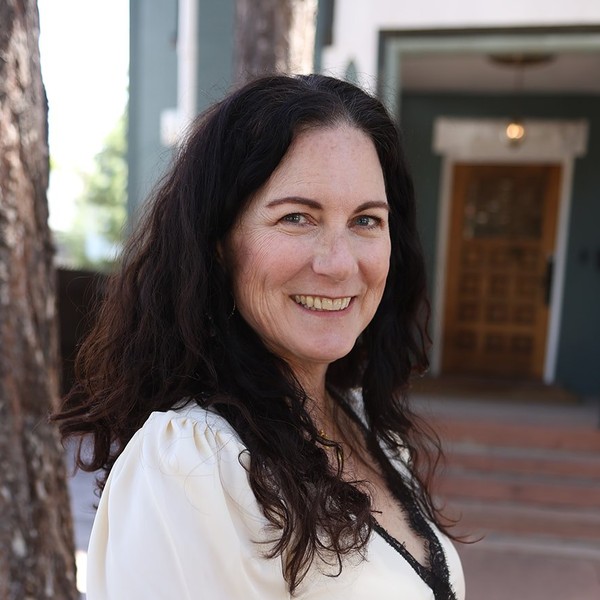
Dr. Gina Terinoni is a Doctor of Chinese Medicine (DACM), certified in integrative medicine through Dr. Aviva Romm’s Women’s Integrative and Functional Medicine program. She has helped more than 2,000 women and couples on their fertility journeys since 2001, and she had her own son at 42. More about Dr. Gina.
Want my eyes on your pattern after loss?
If you’d like to know what your body may need before you try again after loss, your Reveal is the place to start. You send me your intake and tongue photos, I record a personal audio review of your fertility pattern, and then we meet for one 30-minute Zoom call to answer your number one question. It’s $297. Learn about your Reveal here.
This article is for education and is not medical advice, diagnosis or treatment. No outcome is guaranteed. Please talk with your own doctor or qualified provider before making changes to your care.


Leave a Reply