In short: A healthy cycle sits in a range, not on the number 28, and cycles in roughly the high twenties to low thirties tend to have the best odds of conception. Very short or very long cycles can point to early, late or missed ovulation, but research suggests the strongest cycle signal for fertility is consistency: how much your cycle length changes from month to month.
How long is your cycle? Twenty-six days? Thirty? Does it bounce around from month to month? Cycle length and fertility are closely linked, and your cycle is telling you something about your body that most women misread. Here’s what surprises almost everyone: it isn’t really the length that matters most.
I’ve been helping women and couples get pregnant since 2001, more than 2,000 of them, and I had my own son at 42. For over 25 years I’ve read the pattern underneath the numbers, and your cycle length is one of the clearest clues to that pattern. Today I’ll show you how to read yours.
Is a 28-day cycle really normal?
Let’s clear up the biggest myth first. Somewhere along the way, everyone was told that a normal cycle is exactly 28 days. So half the women I meet think they’re broken because theirs is 26, or 31, or 34.
Here’s the truth: a healthy cycle lives in a range, not on a single magic number. Large studies following women who are trying to conceive find that the sweet spot sits in a band of roughly the high twenties to low thirties in days. If you’re at 29, 30 or 31, breathe out. You are not broken; you are textbook. The number 28 was never a law. It was an average someone turned into a rule.
Your action step: count your cycle correctly, from the first day of full bleeding to the day before your next period starts. Spotting doesn’t count as day one.
Does a short menstrual cycle affect fertility?
If your cycle consistently runs on the short side, say 25 days or fewer, research does show that very short cycles are associated with somewhat lower odds of conceiving. But a short cycle is a clue, not a sentence. When I see a short menstrual cycle, I’m not alarmed. I’m curious, because it usually points to one of a few things.
1. A short luteal phase
The luteal phase is the second half of your cycle, after ovulation. If it’s running out of time, the uterine lining may not be fully ready before your period arrives. If you’d like to understand what happens in those days, I explain it in can you get pregnant after ovulation.
2. Ovulating early
Sometimes a short cycle means you’re ovulating very early, before an egg has had its full time to mature.
3. A body running hot and depleted
In Chinese medicine I’d call this a hot, dry, depleted pattern. In everyday terms, you may feel warm at night, sleep lightly, feel wired but tired, have a lighter period and notice a red, dry tongue. These signs often travel together with a short cycle. That body needs cooling and nourishing, not more stimulation.
Your action step: if your cycles are short, start tracking ovulation with basal body temperature or ovulation tests so you can see whether the short part is before ovulation or after it. That one detail changes the direction of support.
What do long or irregular cycles mean for getting pregnant?
Now the long end. If your cycle regularly stretches past 35 days, or is all over the map, that’s also a meaningful clue. Long cycles frequently mean ovulation is happening late, or not every month. That simply means fewer chances each year, and sometimes eggs released past their best window. It’s a common picture with PMOS (PCOS), thyroid imbalance and high stress.
In Chinese medicine I’d call this a damp, sluggish, cool pattern. You might notice feeling heavy or puffy, cold hands and feet, low energy after meals, and a pale, swollen tongue with tooth marks along the edges. The long cycle and that tongue are often the same story told two ways. This body tends to want warmth and movement so things flow on time.
Daily rhythm matters here more than most women realize. I’ve worked with night-shift doctors and flight attendants whose cycles became irregular. Regulating their sleep helped bring their cycles back, and one was pregnant within four months of starting her herbal medicine. Every woman is different, and I can’t promise that for anyone.
Your action step: keep your sleep and wake times within the same hour every day, including weekends, for the next month. It’s one of the simplest ways to give a long cycle a steadier rhythm.
Why does cycle consistency matter more than length?
This is the finding I most want you to remember, because almost no one talks about it. In the research, the strongest cycle-related signal for fertility isn’t whether your cycle is short or long. It’s whether it’s consistent. In one large study, women whose cycle length swung widely from month to month had a much lower monthly chance of conceiving than women whose cycles were steady.
So if your cycles are 26 days one month, 38 the next and 31 after that, that variability is the loudest signal on the dashboard. Here’s why I find that hopeful: consistency reflects how your whole body is doing. When your blood sugar is steady, your stress is regulated, and your thyroid, circulation and nourishment are in a good place, your body tends to ovulate on a more predictable rhythm.
That means as you care for your body, one of the first things that often settles is your cycle. Your cycle length isn’t just a report card. It’s a live feedback loop. Watch it steady, and you’re watching your body come back into balance. And because each egg goes through roughly 90 days of final maturation, the work you do now also supports the eggs you’ll release in three months. I share more on that in how to improve egg quality after 35.
One more thing: a generic supplement stack won’t fix an irregular cycle if it isn’t matched to your pattern. You cannot out-supplement an untreated pattern. A hot, depleted body and a cool, sluggish body need opposite things. And you deserve to feel well now, not only for a future baby.
Your action step: for the next three cycles, track two things: the length of each cycle, day one to day one, and one line on how you felt that month, covering energy, stress and sleep. Don’t judge a single cycle. You’re looking for the pattern over three.
When should you talk to your doctor about your cycle?
Bring it to your provider if your cycles are very short, very long, missing, or suddenly change. US guidance from the American Society for Reproductive Medicine suggests a fertility evaluation after 6 months of trying if you’re 35 or older, and sooner if you’re over 40. Chinese medicine works alongside your doctor and clinic, never instead of them. If you’re preparing for IVF, IUI or a frozen embryo transfer, herbal support belongs in the months before your cycle and is stopped once fertility medications begin.
Your action step: bring your three months of cycle notes to your next appointment.
Frequently asked questions
What cycle length is best for getting pregnant?
Research suggests cycles in roughly the high twenties to low thirties in days tend to have the best odds of conception. A steady cycle in that range is a good sign on this one signal.
Can you get pregnant with a short cycle?
Yes, many women do. Very short cycles are linked with somewhat lower odds, so it’s worth checking when you ovulate and how long the second half of your cycle lasts.
Do irregular periods mean I’m not ovulating?
Not always. Irregular cycles often mean ovulation is late or doesn’t happen every month, so tracking ovulation and talking with your doctor can show what’s really going on.
Can my cycle become more regular?
It often can. Steadier sleep, balanced blood sugar, lower stress and support matched to your pattern may help your cycle settle into a more predictable rhythm over a few months.
About the author: Dr. Gina Terinoni, DACM
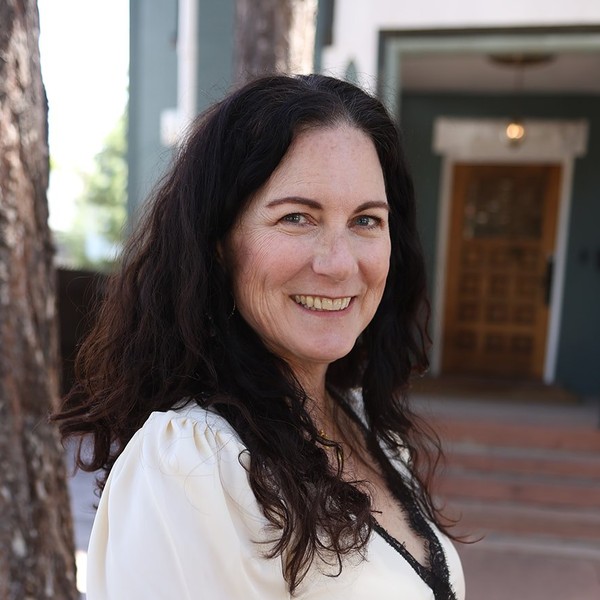
Dr. Gina Terinoni is a Doctor of Chinese Medicine (DACM), certified in integrative medicine through Dr. Aviva Romm’s Women’s Integrative and Functional Medicine program. She has helped more than 2,000 women and couples on their fertility journeys since 2001, and she had her own son at 42. More about Dr. Gina.
Curious what your cycle is telling you?
If you’d like to know what your own cycle length and pattern are asking for, your Reveal is the place to start. You send me your intake and tongue photos, I record a personal audio review of your fertility pattern, and then we meet for one 30-minute Zoom call to answer your number one question. It’s $297. Learn about your Reveal here.
This article is for education and is not medical advice, diagnosis or treatment. No outcome is guaranteed. Please talk with your own doctor or qualified provider before making changes to your care.


Leave a Reply